What is Prolotherapy - and Why Does It Work?
What Is Prolotherapy — and Why Does It Work?
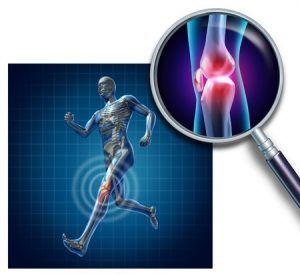
When Connective Tissue Gets Injured
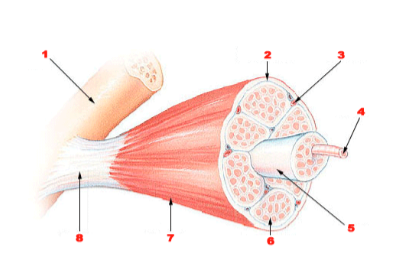
Tendons and ligaments are the structural cables of your body.
- Tendons connect muscle to bone.
- Ligaments connect bone to bone.
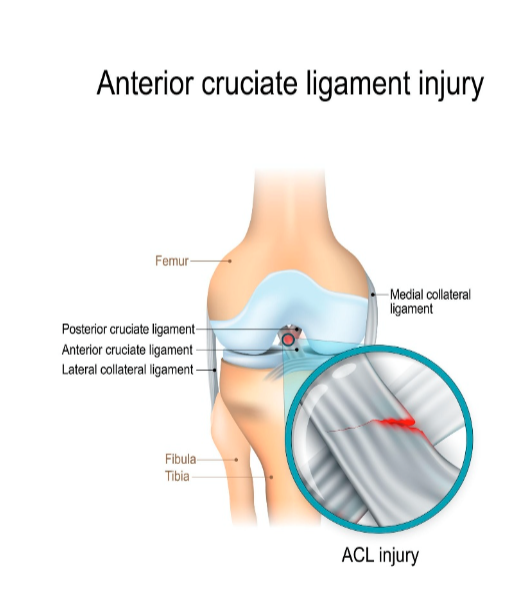
When excessive force is placed on these tissues — a fall, a twist, a sudden lift, or even repetitive
strain — microscopic tearing can occur.
In a young, healthy body, it often takes a fairly large force to cause meaningful damage. And
when injury does happen, the repair system is strong and efficient. Soreness resolves. Stability
returns. Life goes on.
But with aging — or with tissues compromised by prior injury, inflammation, or repetitive
overuse — something changes.
- The tissue becomes less elastic
- Blood supply is more limited
- Collagen repair slows
- Recovery takes longer
Now it takes
less force to cause damage.
That’s why someone in their 50s or 60s can bend to pick up a bag of groceries or step off a curb
and suddenly develop persistent pain — even though they’ve performed that same activity
thousands of times before without issue.
Why Pain Becomes Chronic
In earlier years, a mildly strained tendon might feel sore for a few days and then heal naturally.
Compromised tissue is different.
Tendons and ligaments already heal more slowly than muscle because they have limited blood
supply. If the body’s repair mechanisms are also slowed due to age or metabolic stress, healing
may stall.
When tissue doesn’t fully repair:
- The joint becomes subtly unstable
- The area is more vulnerable to re-injury
- Inflammation lingers
- Pain persists
Slow-healing tissue is at higher risk for repeated microtrauma — and this cycle is how acute pain becomes
chronic pain.
Prolotherapy to the Rescue
Prolotherapy is designed to interrupt that cycle.
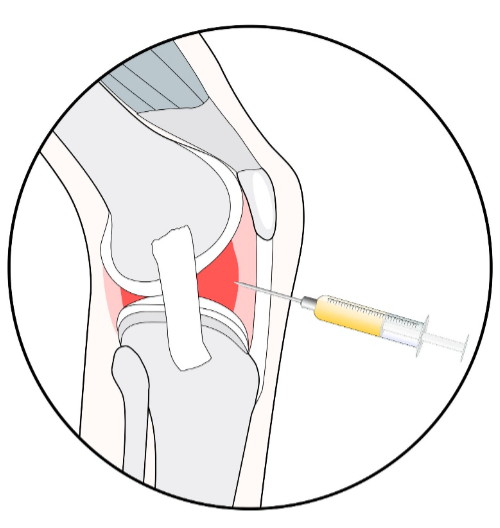
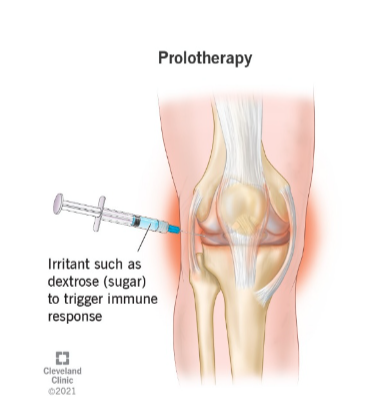
In simple terms, prolotherapy provides a precise stimulus to the injured tendon or ligament that
encourages the body to restart and amplify its healing response.
A natural irritant solution is injected into the weakened connective tissue. This:
- Increases local blood flow
- Activates repair cells
- Stimulates collagen production
- Promotes strengthening of the damaged structure
Rather than masking pain, prolotherapy addresses the
underlying structural weakness.
What Does Healing Look Like?
Without intervention, chronically injured connective tissue may:
- Improve slowly over months
- Plateau without full recovery
- Continue cycling between “better” and “flared up”
- Persist for years
With prolotherapy, most patients undergo a series of treatments that progressively build tissue
strength.
Typical schedule:
- Initial treatments spaced 2–3 weeks apart
- As stability improves, sessions are spaced further apart
- Most cases require several sessions depending on severity and chronicity
Healing is gradual and cumulative. The goal is not a temporary decrease in pain — but durable
structural repair.
Supporting the Repair Process
Because connective tissue repair depends on collagen synthesis and proper nutrient availability, your doctor may recommend targeted supplements to support:
- Collagen production
- Vitamin C–dependent repair pathways
- Amino acid availability
- Anti-inflammatory balance
When mechanical stimulation (prolotherapy) is paired with metabolic support, outcomes are
often improved.
Don’t Wait for Chronic Pain to “Just Go Away”
If pain has lingered for months — or keeps returning — it may not be an inflammation problem.
It may be a
structural repair problem.
Waiting can mean:
- Ongoing suffering
- Progressive tissue weakening
- Increasing compensation patterns
- A lifetime of “manageable but never resolved” pain
Chronic pain rarely resolves on its own once connective tissue instability is established.
Call to Action
If you suspect your pain may be coming from a tendon or ligament injury that hasn’t properly
healed, now is the time to address it.
Call us today to set up a consultation and evaluate your situation.
You’ve got nothing to lose but your pain.